
Autumn 2025, Volume 52
Features
The Significance of Music in Buddhist Practice
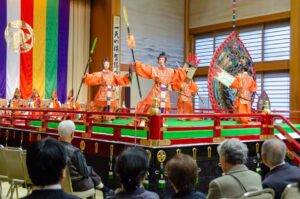
Music plays a vital role in Buddhist practice, encompassing various forms such as chanting, tunes, and dance. These practices are prevalent in both monastic and folk traditions, involving the rhythmic vocalization of sounds and phrases, often repeated in the mind. Music is considered an offering to the Buddha and serves as a means of memorizing Buddhist texts.
However, Buddhism has historically had a nuanced stance on music. In many Buddhist traditions, the seventh precept for novices and lay devotees prohibits dancing, singing, music, and entertainment. Early Buddhist texts contain passages where the Buddha directly condemns music, citing its potential to lead to sensual desire and attachment, hindering meditative concentration and mental peace.
On the other hand, Mahayana Buddhist literature presents a more positive perspective on music. The Lotus Sutra also introduces the bodhisattva Wondrous Sound, who is said to have played music for countless eons to revere the Buddha. Through accumulating merits, this bodhisattva gained the transcendent power to take various forms and disseminate the Lotus Sutra.
In Japan, music has been an integral part of Buddhist practice since ancient times.
In Japanese Buddhism, a musical practice called shomyo, in which sutras are chanted to a set rhythm and melody, is performed at ceremonies, and different styles have been used by the Tendai, Shingon, Nichiren, and some Zen sects.
Exploring the power of music in Buddhism raises intriguing questions. Could it be argued that music, once perceived as an obstacle to the path, has evolved into an essential aspect of offering prayers to the Buddha and engaging in Buddhist practices? We would like to examine the diverse aspects of music’s meaning and roles within Buddhism and its profound impact on the lives of contemporary Buddhists.
Singing Praises to the Buddhas and Bodhisattvas:
Music in Japanese Buddhist Rituals
by Michaela Mross
Music is not only a means of expressing religious devotion; it also helps create a community of fellow practitioners who support each other in their religious pursuits.
A Brief History of Shōmyō, Japanese Buddhist Chant
by Steven G. Nelson
Music researchers and contemporary composers began to take an interest in shōmyō as one of the main genres and sources of Japanese vocal music.
Changes in the Significance of Music in Buddhism
by Masashi Hashimoto
With the emergence of Mahayana, the arts of music and dance and such came to be regarded as practices to attain our own enlightenment—a substantial development.
Buddhism, Music, and Salvation
by Fabio Rambelli
Music is a skillful means to please laypeople and patrons of the Sangha, or an offering to the buddhas and bodhisattvas.
Esoteric Buddhism and the Mandala
by Michihiko Komine
Even though the realm of enlightenment cannot be expressed in everyday language, Esoteric Buddhism has another way to enable this: the mandala.
Niwano Peace Prize
No Justice Without Equality
by Zainah Anwar
Board Chair, Musawah
The Niwano Peace Foundation awarded the forty-second Niwano Peace Prize to Musawah, a global movement for equality and justice in the Muslim family that advances human rights for women living in Muslim contexts, in recognition of its immense efforts to strengthen citizenship and peaceful coexistence in diverse societies, and to create contexts and platforms for interfaith dialogue and spiritual solidarity. The award ceremony took place on May 14, 2025, at the International House of Japan, in Tokyo. The recipient’s address follows.
Rissho Kosei-kai Buddhism
What Is the Place of Emptiness in Rissho Kosei-kai Buddhism? Part Two: Emptiness in the Second Half of the Lotus Sutra
by Dominick Scarangello
The vivid descriptions of tangible and concrete phenomena in Chapter Sixteen of the Lotus Sutra may initially seem irreconcilable with the doctrine of emptiness. However, the subsequent chapters, which highlight the merits of awakening to the Buddha’s eternal life and recognizing his presence in the world, suggest that realizing emptiness is not only integral to, but also ultimately transcended by, the realization of the Buddha’s eternal life.