
October–December 2013, Volume 40
Features
Nuclear Power and Contemporary Religion
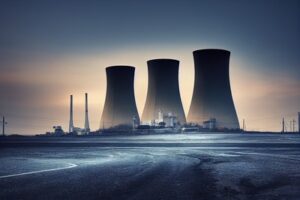
The Great East Japan Earthquake and tsunami that struck with devastating effect on March 11, 2011, wrecked the lives of many people, as well as entire communities. The lives of many individuals and families have also been disrupted by the resulting accident at the nuclear power plant in Fukushima. Radiation contamination forced nearby residents to leave their homes and communities not knowing when they might be able to return. Countless families worry about the possible effects of radiation on their children, born and unborn. The accident has also alarmed people around the world, imposing an incalculable responsibility on future generations.
Nuclear power was once called “the energy of the future,” and the Japanese are among its beneficiaries, but they have largely ignored its potential dangers. The use of nuclear power affects the health of workers in uranium mines and in nuclear power plants. The production of large amounts of high-level nuclear waste places a tremendous burden on the environment, since the waste remains radioactive for millions of years. The Japanese have just learned at first hand the lesson that it takes only one nuclear accident to cause widespread alarm and threaten physical harm.
Since the 2011 nuclear disaster, many religious denominations and new religious movements in Japan have issued statements calling for a world that does not rely on nuclear power. An international interreligious conference was held recently in Fukushima to discuss nuclear power.
Rissho Kosei-kai’s statement of June 2012 urges the need to concentrate knowledge and wisdom on developing and using renewable sources of energy, and above all to reconsider the values and lifestyles that have endlessly escalated energy consumption at the cost of great sacrifice by so many people.
The world needs to stop putting material prosperity, which depends on nuclear power, above all else. We believe religions offer moral principles that can persuade the world to do without nuclear power, and we invite religious leaders and scholars of religion to offer their views on the use of nuclear energy and suggest what religions can do to foster a world where all people live in harmony with each other and the environment.
Features
Nuclear Power Tests Our Humanity
by Yoshiaki Sanada
The Fukushima nuclear disaster demands that we answer fundamental questions about what it means to be human, what it means to live, what happiness is, what society and the state are, and what civilization is.
Statement
Toward a Truly Prosperous Society—Beyond Nuclear Power
Referring to the effects of the nuclear accident on people in Fukushima and on the entire environment, Rissho Kosei-kai issued a public statement, “Toward a Truly Prosperous Society—Beyond Nuclear Power,” on June 18, 2012. The statement appeals for a nuclear-free and truly prosperous society. It also refers to the responsibility of people today for future generations.
Features
The Three Nuclear Poisons
by David R. Loy
If institutions attain a life of their own, does it also mean that they have their own motivations? That brings us to the crucial question: can we detect institutionalized greed, aggression, and delusion in the promotion of nuclear power?
Nuclear Power and Contemporary Religion: A Catholic Viewpoint
by Theodore Mascarenhas
If it is the dignity of the human person that is to be placed at the very heart of progress and development and all political, social, and economic decision making, then nothing takes higher priority than the very safety of the life and health of the peoples for whom this development is meant.
Japan and the Four Noble Truths of Nuclear Energy: A Buddhist Response to Social Injustice
by Jonathan S. Watts
Socially Engaged Buddhists have over the years developed a way of understanding dukkha (suffering), and the Buddha’s Four Noble Truths on the arising and cessation of dukkha, as a particularly Buddhist approach to the problem of social injustice. This approach seeks to extend the liberatory practices of Buddhism, which appear to center on the individual, to the collective level.
The TEPCO Nuclear Disaster and the Responsibilities of Religions
by Martin Repp
It is time that religious individuals and organizations in Japan liberate themselves from feudal structures and struggle against the terror of the nuclear industry, the sale of contaminated food under the pretext of false “patriotism,” the burning of contaminated waste, the insufficient evacuation of citizens, and the failure to treat cancer patients in Fukushima.
Our Sins and Responsibilities: What the Fukushima Accident Has Revealed
by Tetsuya Takahashi
We face the profound contradiction that, in our excessive desire for the good life, we have saddled ourselves with a large quantity of things that could make living our lives impossible. It would in no way be wrong to say that this is a sin.
Nuclear Energy and Ethics: The Lessons of Fukushima
by Yukio Yamaguchi
Besides following a spirit of inquiry, scientists must take ethical responsibility for their discoveries and not allow their discoveries to force sacrifices on others. This means that the majority of people must press for reform of the world of knowledge.
Heeding the Voices of Foxes and Brown Dippers
by Sarah M. Strong
With our human intelligence . . . we have developed technologies that have made the frightening kamui of nuclear reactions an ongoing presence in our human world. Much as we long for perfect control over this power, there is no way we can achieve that with certainty.
The Prism of the Lotus Sutra (2)
by Atsushi Kanazawa
Essay
A Catholic Appreciation of Buddhists and Buddhism: A Personal Journey
by Leo D. Lefebure
The voices of Shakyamuni Buddha and Jesus Christ are clearly not the same, but their overtones intermingle and flow together into our ears.