
October–December 2011, Volume 38
Features
The Evolution of Funerals in Japan
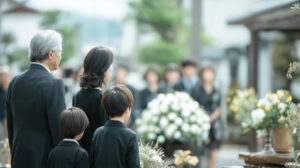
In recent years in Japan, funerals have departed from tradition. The aging of society and the weakening of ties between traditional Buddhist temples and their parishioners have brought about the diversification and simplification of funerals. Many Buddhist temples, which have depended financially on donations received for funerals and memorial services, have had to rethink the meaning of funerals. On the other hand, more and more people have abandoned traditional religious values and sought completely new meaning in funerals.
We will look at the changing forms of funerals in Japan and the meaning of funerals for people today, and what role religion, especially Buddhism, continues to play, the role that it has largely monopolized until today in Japanese society.
Cemeteries and Changing Lifestyles in Japan
by Norio Yoneda
About half a century after [Rissho Kosei-kai’s] cemetery was established, it began to experience alterations that reflected the changes in the daily lives of the Japanese people.
Changes in Care for the Dead in Japan
by Stephen G. Covell
Death practices—how we deal with the body, where we dispose of the remains, how we ritualize the passing of another human being—have changed in Japan.
Recent Trends in Funerals in Cross-cultural Perspective
by Michael Pye
The question arises whether . . . secularization processes lead to a convergence in the understanding of death rituals as between Japan and western Europe.
Rituals for the Dead Today
by Haruyo Inoue
Privatization, individualization, and the rejection of religion are the three main trends I see in the evolution of rituals for the dead in recent years,
Traditional Buddhism and Diversification in Funeral Practices
by Yoshiharu Tomatsu
Because death and funerals can be explained in many ways, there can be confusion and worry over how to conduct funerals, complicating the dealings between relatives and the temple.
Truly Feeling Connected to Eternal Life
by Shinmon Aoki
What one experiences at the scene of a death is a deep recognition of perpetuity and eternity.
Funerals and Japanese Buddhism: Between Doctrine and Popular Custom
by Kokan Sasaki
Buddhist doctrine and popular custom, which in logical terms should be considered contradictory . . . , have in fact been skillfully joined together to form the composite religious form that we call funerary Buddhism.
Seminar Report
The Lotus Sutra and Confucianism: A Report on the Fifteenth International Lotus Sutra Seminar
by Joseph M. Logan
Essays
Buddhist Economics for a Sustainable World
by Sulak Sivaraksa
The Niwano Peace Foundation presented the twenty-eighth Niwano Peace Prize to Mr. Sulak Sivaraksa of Thailand in recognition of his unflagging contribution based on the core principles of his Buddhist faith to a new understanding of peace, democracy, and development and to his advocacy for environmental protection. The prize was presented in Kyoto on July 23. The following is the recipient’s acceptance speech.
Religion’s Response to the Earthquake and Tsunami in Northeastern Japan
by Keishin Inaba
People of faith are . . . acting to comfort the sufferers, collaborating with each other across religious lines.