
July–September 2012, Volume 39
Features
The Significance of Religious Communities
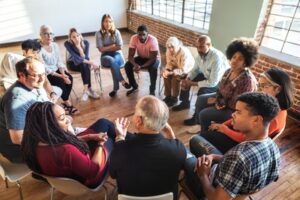
In many religious traditions, communities of believers play an important role in the religious life of individuals, both clerical and lay. For us Buddhists, as you well know, the Sangha, or community of practitioners, is one of the Three Treasures, together with the Buddha and the Dharma. In the Lotus Sutra, one of the four requisites for becoming a bodhisattva is “joining the assembly of those resolved to become awakened.”
The concept of a religious community may vary according to different religious traditions, but we believe that in any religion the community is important, because religion has true meaning only when its teachings are practiced by its followers and when its truth comes alive among people.
Any community risks the danger of schism or division, however, which can occur wherever people with different personalities form a group. Division can also result from various kinds of discrimination and lead to violence, and religious groups sometimes harm societies and individuals. That behooves us to reflect on some aspects of religious communities.
We believe that by examining religious communities of different faiths we can glimpse how faith comes alive through the interaction of people of faith and that we can appreciate the wholesome effects that the activities of religious communities have on the lives of individuals and the function of society.
Why We Should Join a Sangha
by Yukimasa Hagiwara
Communities of Life and Dialogue in the Catholic Church
by Brendan Leahy
Although many people in our modern, secularized world have rejected religious ways of thinking or have lost touch with spiritual resources previously available in their religious traditions, they search for a deeper grounding for living and serving that only spiritual disciplines can provide.
The Muslim Community in Japan
by Samir Abdel Hamid Nouh
Though the Muslim community is very small, the Japanese public of today has generally accepted it as part of Japanese society. For the most part, Japanese people accept cultural differences as colorful aspects of the world and understand that other cultures are actually not very different from their own
Neve Shalom/Wahat al-Salam: Community Responses to Conflict
by Abdessalam Najjar
Dispute resolution methodologies traditionally appeal to shared values and norms that are universally accepted within a given culture. A different type of challenge is involved when it comes to approaching conflict in a multicultural society or between two separate groups who do not share a common belief system, background, or values.
The Crucial Role of Community for Holiness and Universal Vision
by Peter Feldmeier
Community is crucial because in it you enter a great mystery that is not your own. You’re tapping into the divine but not as a separate self. You lose your separateness, and the walls between you and others and you and God get thinner
Why the Sangha Exists, and Its Limits
by Ryumyo Yamazaki
Only a true Sangha, with the light of the Buddha Dharma at its core (separate from the frameworks of government, the economy, society, and so forth), can truly confront the multiple real-world issues that we face.
Niwano Peace Prize
Harmony and Peace
by Rosalina Tuyuc Velásquez
The Niwano Peace Foundation awarded the twenty-ninth Niwano Peace Prize on May 10 to Ms. Rosalina Tuyuc Velásquez, a human rights activist and political leader in Guatemala. It was the first time for a practitioner of an indigenous religious tradition (in her case, Mayan) to receive the prize. Ms. Velásquez was honored for her unflagging work, which has exemplified the great potential and wisdom of indigenous peoples in marking paths to peace. She also has highlighted the critical role of women’s work for peace. The presentation ceremony took place in Tokyo. This is her acceptance speech.
Essay
The Bodhisattva Way in Rissho Kosei-kai and the Lotus Sutra
by Gene Reeves
In the Lotus Sutra, a bodhisattva is one who is wise enough to know that he or she cannot be saved unless everyone is. A bodhisattva is well aware of the interconnectedness and interdependence of all things.
Founder’s Memoirs
Rissho Kosei-kai’s Second Step Forward
by Nikkyo Niwano
Seminar Report
The Lotus Sutra and Human Suffering
by Stefan Grace
This is a report on the 2012 International Lotus Sutra Seminar, sponsored by Rissho Kosei-kai and held March 6–11 at the National Women’s Education Center of Japan in Musashiranzan, Saitama Prefecture. This year’s theme, “The Lotus Sutra and Human Suffering,” commemorated the tragic events of March 11, 2011