
July–September 2007, Volume 34
Features
Respect for Ancestors
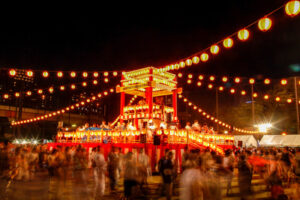
Why Respect for Ancestors Is Important
by Kotaro Suzuki
Japanese Ancestor Veneration in Comparative Perspective
by Michael Pye
The practice of caring for one’s ancestors is, of course, not unique to Japan. On the contrary, it is a basic element of “primal religion” in all cultures.
The Place of Ancestors in Buddhism and Christianity
by Mark R. Mullins
Over the previous century, many Christian churches and movements have instituted a wide range of post-funerary rites that resemble Buddhist practices in many ways.
The Japanese and Ancestor Veneration
by Kokan Sasaki
Buddhism in Japan features a unique relationship between the Buddha and deceased kindred and ancestors. Long efforts by sects and denominations to steer followers away from ancestors to the Buddha have had little success.
Ancestor Veneration among Japanese-Americans in Hawaii
by Joshin Washimi
Over one hundred and twenty years have passed since Japanese people first came to Hawaii. It seems only natural that the religious activities of their descendants should adopt a style that fits into the American cultural landscape.
Honoring One’s Ancestors under Islam
by Jiro Arimi
Followers of Islam live in an everlasting struggle to accomplish the obligatory deeds demanded of them, and while ancestors are being commemorated, succeeding generations become more conscious of their obligations.
Ancestor Appreciation
by Kris Ladusau and the Oklahoma Sangha
This we know: All things are connected like the blood which unites one family. All things are connected. Whatever befalls the earth befalls the children of the earth. Man did not weave the web of life. He is merely a strand on it. Whatever he does to the web he does to himself.
—Chief Seattle
A Theological Interpretation of the Veneration of Ancestors in Rissho Kosei-kai
by Michio T. Shinozaki
Ancestor veneration is a skillful means for the practice of Buddhist teachings. In our organization, it is truly a Buddhist practice, though it involves a new interpretation of the traditional practice.
Essays
Religion as an Element of Mutual Recognition
by Hans Ucko
In every religious tradition there are texts that in different ways speak of respect for and recognition of other religious traditions.
The Values of Freedom of Expression and of Freedom of Religion or Belief as Protected by the United Nations in Postmodern Society
by John B. Taylor
Laws and punishments are not the only ways of ensuring respect for fundamental freedoms. A change of attitude can bring new life to values prescribed by religions and human rights principles.
Envisioning Dharmic Societies
by Kenneth Kraft
A good society would recognize the inherent worth of all people and would help its citizens to cultivate inner peace. This essay is based on an address delivered by the author at a symposium held by Religions for Peace and Rissho Kosei-kai of New York at the Japan Society in New York to commemorate the centennial of the birth of the late founder of Rissho Kosei-kai, Rev. Nikkyo Niwano, on December 14, 2006.
Japanese Buddhist Folktales
Reflections
Restoring Warmth in the Family
by Nichiko Niwano
As we continue striving to perfect our character, the family home can be considered the best place for training ourselves to do so.