
The Japanese word arigatai, meaning literally “difficult to be,” is used to refer to something that is rare or seldom occurs. Gratitude over a joyful, rare encounter is said to have originated the familiar word arigatō, meaning “thank you.” A Japanese linguist has sought the origins of the word arigatai in the Lotus Sutra.
The theory that arigatai has its origins in the Lotus Sutra is based on several passages in the Lotus Sutra. For instance, in the chapter “Skillful Means” we read: “The Buddha addressed Śāriputra: ‘Such a wonderful Law as this is [only] preached by the buddha-tathāgatas on [rare] occasions, just as the udumbara flower is seen but once in [long] periods.’” In another chapter, “The Story of King Resplendent,” we find: “It is as hard to see an udumbara blossom as to meet a buddha.” The gist of these passages is that it is extremely difficult to be blessedly born human and moreover to meet the Buddha and hear his teachings, so we should not forget to be grateful for our good fortune in being blessed with such a rare opportunity.
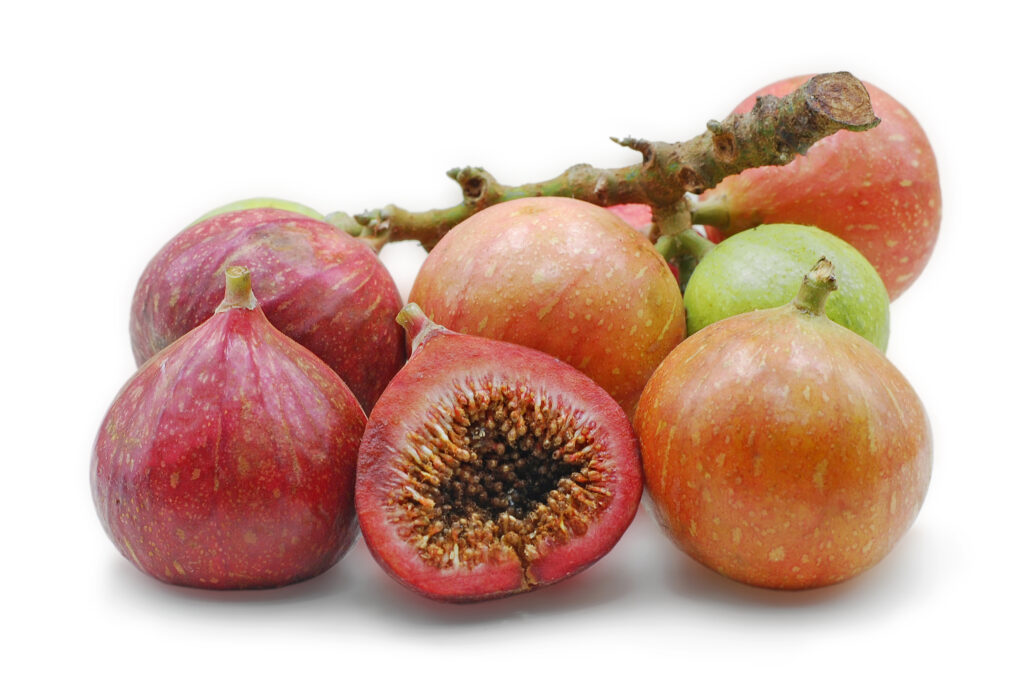
The analogy used in such contexts in the Lotus Sutra and other sutras is to the udumbara flower. A tall deciduous tree of the Moraceae, or mulberry, family, the udumbara (Ficus racemosa) belongs to the same genus as the fig tree, with which we are all familiar. The syconium, or fruit, of the udumbara is filled with masses of tiny flowers, but because the flowers are not normally visible, Indians believed that the udumbara flowered only once every three thousand years. But even though this is why its blossoms came to symbolize rare events, it goes without saying that this does not in any way diminish our fervor and feelings of gratitude for the Buddha, his teachings, and the Lotus Sutra.
Atsushi Kanazawa is a professor emeritus in the Faculty of Buddhism at Komazawa University, Tokyo. He specializes in the Indian philosophy of language and the history of Indian philosophy and culture.