
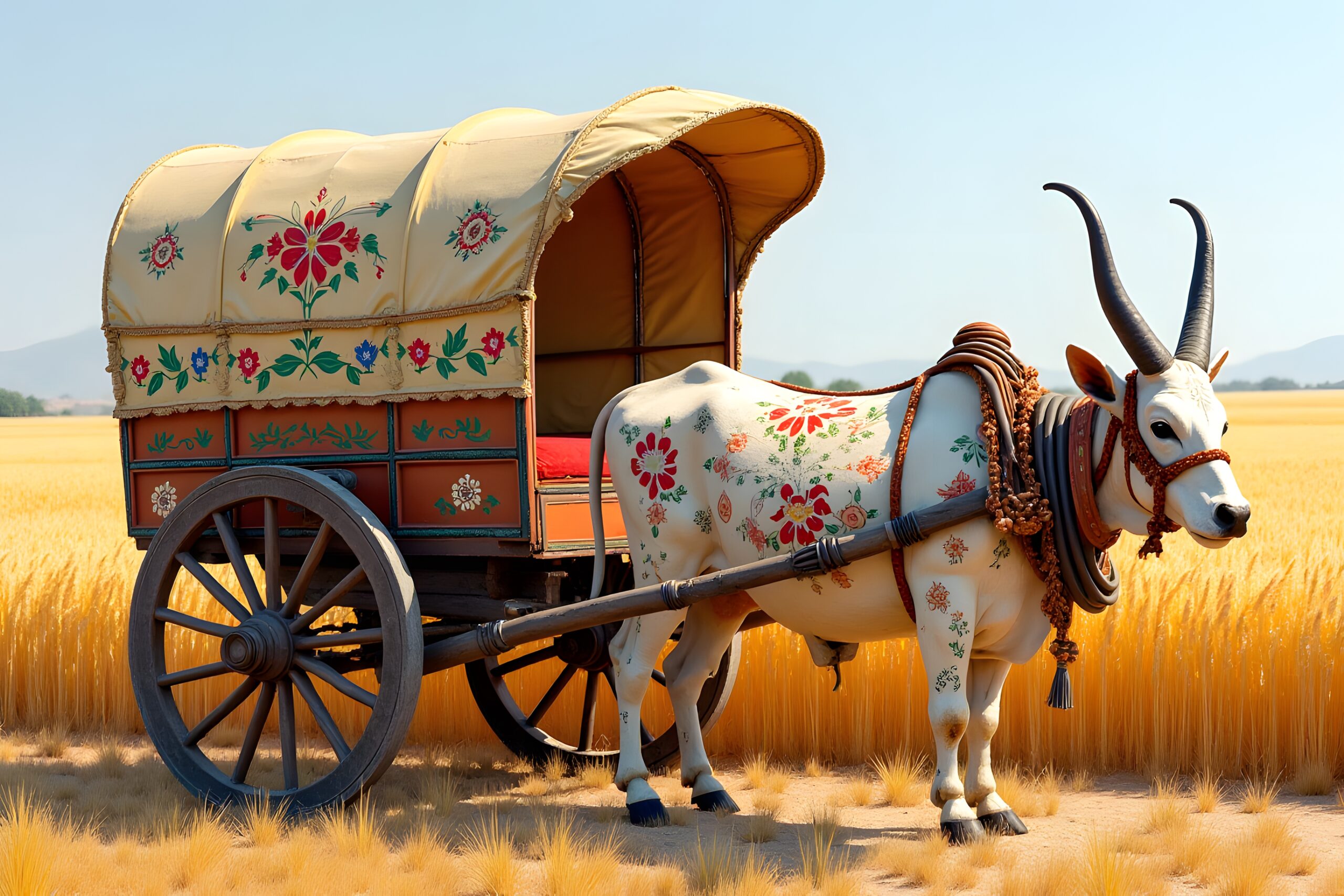
 The Buddha, like any teacher, has to use appropriate means in order to lead others to the realization of their own potential. In chapter 3 of the Lotus Sutra, this is illustrated by the Buddha’s tale of how a father uses his wits and skillful means to persuade his children to leave a burning house.
The second chapter, often called the key to understanding the first half of the Lotus Sutra, teaches in some detail the idea of skillful means,1 certainly one of the central teachings of the Lotus Sutra, and perhaps even the most important one.
The chapter begins with the Buddha emerging from contemplation to explain to his disciple Shariputra why it is that the wisdom of the buddhas is so difficult, so nearly impossible, to comprehend. This is basically because, in order to save various living beings, all the buddhas have made use of an enormous variety of methods and teaching devices appropriate to different situations in order to teach Buddha Dharma. Thus the three ways—the way of the shravaka, the way of the pratyekabuddha, and the way of the bodhisattva—are teaching devices to enable different kinds of people to enter the One Buddha Way. Shariputra, speaking on behalf both of himself and others, is perplexed, still does not understand, and repeatedly pleads with the Buddha to explain further. The Buddha twice refuses on the grounds that it would just further confuse things, but finally agrees to teach the full Dharma.
At this point some five thousand monks, nuns, and lay people in the congregation, so arrogant that they think they have already attained the highest possible wisdom and have no more to learn, get up from their seats, bow to the Buddha and leave. The Buddha does not try to stop them, remarking that the congregation had thus been cleared of little-needed twigs and leaves.
The Buddha then explained again that all the buddhas of the past, all the buddhas of the various worlds of the present, and all of the buddhas of the future use various literary and teaching methods, including a great variety of sutras, as required by the situation, all for the sake of leading people to the One Buddha Way. Such teachings, he insists, are neither empty nor false. In particular, the teaching of nirvana was invented for people not yet ready for the Great Vehicle in order to lead them to enter the Way by which they will become buddhas. Included is a long list of practices, such as bowing to a buddha image or making an offering to or entering a stupa, by which people have entered the way toward becoming a buddha themselves. All of this, he says, is in accord with the Buddha’s ancient vow to lead all living beings to full awakening, that is, to lead them to become buddhas themselves.
With this, the Buddha announces that since buddhas very seldom appear in the world he will now teach the One Vehicle, but only to bodhisattvas.
Shariputra, the leading shravaka and not normally regarded as a bodhisattva, feels like dancing for joy because he realizes the truth of the Dharma, the truth that he too is to become a buddha and in that sense is already a bodhisattva. In the third chapter, the Buddha further reassures Shariputra that this is indeed the case and explains that he will become the Buddha Flower Light and describes the era and the buddha land of that Buddha. This, in turn, causes all others in the assembly to rejoice and say that, after the first turning of the wheel of the Dharma at Varanasi, the Buddha has now turned the wheel of the greatest Dharma.
Shariputra, though encouraged by this assurance, on behalf of those devotees who do not yet understand once again begs the Buddha to explain why, if there are not three paths, he has so often preached them in the past. And this time the Buddha does so by means of the famous parable of the burning house.
The Parable
A rich man’s house, now in terrible state of repair and for which there is only one narrow gate, catches on fire with all of his many children playing inside. Though the father compassionately calls to them, urging them to leave the burning house, they are too absorbed in their play to listen to these warnings. He also considers carrying them out by force, but soon realizes that this too will not work. So he tells the children that, if they go out quickly, outside the gate they will find goat-drawn carriages, deer-drawn carriages, and ox-drawn carriages that he will give them to play with.
Such rare playthings being just what they always wanted, the children rush outside, to the great joy of the father, and soon ask him for the promised carriages. Instead, because he is rich and has many of them, he decides to give each of the children a much larger and fancier carriage drawn by a great white ox. The children, having received something they never could have expected, are overjoyed.
Interpreting the Parable
Then the Buddha interprets this parable for Shariputra, explaining that he, the Buddha, is much like the father in the parable, attempting to save his children from the fires of birth, old age, disease, death, grief, sorrow, suffering, and so on, from which they cannot escape by themselves because they have many attachments. He offers them the three vehicles as a way to get them through the gate, but rewards them in the end with the Great Vehicle—an even better reward than the one promised.
Some Lessons:
(1) Analogies
Parables are metaphorical; they are analogies, but never perfect ones. This parable provides an image of four separate vehicles. But if we follow the teaching of the sutra as a whole, the One Buddha Vehicle is not a separate alternative to other ways; it includes them. Thus, one limitation of this parable is that it suggests that the diverse ways (represented by the three lesser carriages) can be replaced by the One Way (the great carriage). But the overall teaching of the sutra makes it plain that there are many paths within the Great Path, and the Great Path integrates them all. They are together because they are within the One Vehicle. To understand the many ways as somehow being replaced by the One Way would entail rejecting the ideal of the bodhisattva way (the third carriage), which the sutra clearly never does.
What the parable stresses is the urgency of the human situation, making it necessary for the Buddha to find some way to get people to leave their play and suffering behind in order to enter the Way. The Buddha, we are to understand, has used such means, not to deceive people, but to lead them to awakening. For this, he has used a great variety of ways and means, here represented by the three carriages.
It is extremely important, I believe, to understand that the many skillful means are always within the One Buddha Way, not alternatives to it. The many skillful means are “skillful” only because they skillfully lead to the One Way; and the One Way exists only by being embodied in many skillful means. Understanding the One Way and the many skillful means as separate, alternative ways has been a great mistake, a mistake that has sometimes led to disrespect, intolerance, and disdain for others.
(2) Smaller Vehicles
We should realize that in this story it is the lure of the three “lesser” vehicles that actually saves the children. In running out, the children are pursuing the shravaka, pratyekabuddha, and bodhisattva ways. And here, these three ways, including the bodhisattva way, are essentially equal, as they are equally effective, perhaps with one appealing to some of the children, another to others, and the other to still other children. These “smaller” vehicles, in other words, are sufficient for saving people, that is, for enabling them to enter the One Buddha Vehicle and become bodhisattvas, ones who are on the way to becoming buddhas themselves.
One of the important insights to be gained from the teaching of skillful means is that many things that are not the whole truth are nevertheless important truths. Just as we should seek the potential to be a buddha in ourselves even though we are far from perfect, we should seek the truth, even the hidden truths, in what others say, in their words and in their stories.
“Others” includes of course other religions and their followers. Followers of the Dharma Flower Sutra can be glad when they encounter people of other faiths who have found carriages appropriate for themselves. The sutra teaches that there are many successful ways, some, no doubt, beyond our imagination.
(3) Criteria for Skillful Means
The Buddha, like any teacher, has to use appropriate skill in order to lead others to the realization of their own potential. But this does not mean that any trick will do. In general, there appear to be three criteria in the Dharma Flower Sutra for something to be regarded as skillful means: appropriateness, skillfulness, and effectiveness. All of the skillful means recognized in the Dharma Flower Sutra have at least these three characteristics.
First, they are for the sake of helping someone else. Often, in the parables, the person who uses skillful means is rewarded for doing so. In this story the father is full of joy from having rescued his children. But the purpose of the skillful act is to help someone else, in this case, the children. The father is rewarded, but his intention is to save the children, not seeking to be rewarded. There is no possibility of using the term skillful means to refer to something that merely shows off one’s cleverness or to some expedient that is primarily for one’s own benefit. The methods, in other words, are always intended to be appropriate and beneficial for those who hear or receive them.
An action that can be characterized as “skillful means” is selected or created to fit the situation and abilities of the recipients of the method, just as good teachers must consider the situation and abilities of their students. When this notion is extended, however, to practices that need to be developed by followers of the Buddha, then it is helpful to construe such means as needing or having a double appropriateness—appropriateness for the practitioner as well as for the recipient. That is, what makes something appropriate in our own practice is not only the abilities and situation of the person being guided but also the situation, and especially the abilities, of the one doing the guiding. Just as good teachers must consider their own abilities, we have to seriously ask ourselves not only “What needs to be done?” but “What can I do?” This is only to say that, insofar as possible, the whole situation, including oneself as part of the situation, needs to be taken into account in order for action to be as appropriate as possible.
In the Dharma Flower Sutra the term skillful is used to describe the methods of buddhas or those in parables who represent the Buddha. They are based on intelligence and insight, even wisdom, but such skill does not, especially in the stories, depend on perfect knowledge. In this parable, the father first tries to get the children to leave the burning house by shouting at them to get out. When that does not work, he considers taking them out by force. When he realizes that that approach will not work either, he comes up with the idea of offering the carriages. It is very important, I think, that the father tells the children that they can have what they most desire. The father, in other words, cannot simply force them out; he appeals to something already in them, and he can do so because he has knowledge and insight into who they are and what they want.
It takes skill to be able to discern what is needed in particular situations. This is one very important lesson of the Dharma Flower Sutra. Rather than offer simple rules that can be followed in all situations, it implores us to analyze the situation and be creative and imaginative, that is, “skillful,” in dealing with it.
Sometimes we like to take the shortest, most direct, way to the solution of a problem, just like the father shouting at his children. Often such direct orders do not work, not because the prescription is incorrect, but because it is not presented skillfully, that is, in a way that will be accepted and acted upon. It takes skill to figure out not only what is needed, but what will be effective.
And skillful means must be effective. They work. There are no examples of skillful methods that turn out to be ineffective. In this story, it is very important that the children are actually saved from the burning house. In Buddhism, intentions are very important, but the Dharma Flower Sutra places much more emphasis on results. The sutra, in other words, while concerned about what goes on in our heads, is even more concerned about what we do with our bodies, that is, with how we behave, with how we live our daily lives.
(4) Means and Ends
Even the very fancy carriage that the father gives to the children is, after all, only a carriage, a vehicle. All of our teachings and practices should be understood as devices, as possible ways of helping people. They should never be taken as final truths.
Appropriate means are means, not ends. In this sense they have only instrumental and provisional importance. While it is true that the notion of skillful means is sometimes used to describe something provisional, it is important to recognize that being instrumental and provisional does not mean that such methods are in any sense unimportant. At one point at least, the Dharma Flower Sutra even suggests that it is itself an appropriate means. The context is one in which the sutra is praising itself and proclaiming its superiority over others (“those who do not hear or believe this sutra suffer a great loss”), but then has those who embrace the sutra in a future age say:
When I attain the Buddha way,
I will teach this Dharma to them
By skillful means,
That they may dwell within it. (LS 273)
It is very interesting that what gets the children out of the house is their pursuit of the three kinds of carriages, that is, their pursuit of the shravaka, pratyekabuddha, and bodhisattva ways. At least with respect to getting the children out of the burning house, these so called lesser ways are effective. And they appear to be equally effective. As we will see later, the sutra champions the bodhisattva way and generally regards it as superior to other ways. But it does not say that these other ways, primarily the shravaka way, cannot be effective. In fact, it says just the opposite—the shravaka way is one of the Buddha’s skillful and appropriate ways of saving people.
(5) Only to Bodhisattvas?
Why does the Buddha say in this chapter that he will teach the One Vehicle, but only to bodhisattvas? In the first chapter, we saw that the Dharma Flower Sutra celebrates both listening and teaching or preaching. In other words, it takes two to teach—teaching is not teaching unless someone is taught. Thus in the first chapter, heavenly flowers fall on both the Buddha and the audience. That idea is extended here with the idea that the Buddha preaches only to bodhisattvas. The point is that to hear the Dharma is to be already, to that degree, a bodhisattva. This is because to truly hear the Dharma is to take it into one’s life, thus to live by it, thus to be a bodhisattva. So it can be said that the buddhas come into the world only to convert people into bodhisattvas.
(6) Lifetime Beginners
As a whole, what the sutra condemns is not lesser vehicles but arrogance, especially the arrogance of thinking one has arrived at some complete truth, at some final goal. Rather, we are called upon by this sutra to be “lifetime beginners,” people who know they have much to learn and always will.2 The five thousand who walk out of the assembly in the second chapter are said to be like twigs and leaves and not really needed, but apparently in chapter 8, they too are told that they will become buddhas.
(7) A Loving Father
In many of the parables in the Dharma Flower Sutra, it is a father figure who represents the Buddha. It is possible that the use of such stories influenced the teachings of the Dharma Flower Sutra, leading it, probably more than any other Buddhist text, to emphasize the father-like nature of the Buddha, personalizing him as it were. Over and over, the Lotus Sutra uses personal language to speak of an ultimately important reality. Far from being “absolute,” or even “omniscient,” as the Buddhist tradition has sometimes claimed, the Buddha of the Dharma Flower Sutra is someone who is very concerned for his children. This means, in effect, that the happiness of the Buddha, the fulfillment of the Buddha’s purpose, depends—again—on us.
It is important to realize that we are similar to the children in this parable of the vehicles. We need guidance, but we will not be forced. We should think of ourselves as collaborators with the Buddha, helping to do Buddha-work, both within ourselves and in the world.
(8) Our Burning House
The parable is interpreted as saying that the world is like a burning house. Much more than in my telling of the story above, the verse version of the parable goes to great lengths to describe the terrors inside the burning house, perhaps leading some to think that our goal should be to escape from the burning house that is this world.
But escaping from the world is not at all what the sutra teaches. Elsewhere it makes clear that we are to work in the world to help or save others. The point here is more that we are like children at play, not paying enough attention to the environment around us. Perhaps it is not the whole world that is in flames but our own playgrounds, the private worlds we create out of our attachments and out of our complacency. Thus leaving the house is not escaping from the world but leaving behind our play-world, our attachments and illusions, or at least some of them, in order to enter the real world.
Awakening is more a road than a destination, more a commencement than a conclusion—a responsibility as much as an achievement. To enter the Buddha Way is not a matter of attaining some great height from which one can boast or look down on others. It is to enter a difficult path, a way. At the end of this parable, the children are very happy, as they have received a gift much greater than they expected, perhaps greater than they could have imagined. But we must not imagine that receiving the gift is the end of the matter.
We can say that their lives and their difficulties—that is, their responsibilities—have now really only just begun.
Notes
- 方便 (Chinese fāngbiàn, Japanese hōben) Sanskrit upāya
- The title of the English version of Nikkyo Niwano’s autobiography is Lifetime Beginner (Tokyo: Kosei Publishing Co., 1978)
Gene Reeves (1933–2019) was a Unitarian Universalist minister and dean of the Meadville Lombard Theological School in Chicago. He also studied and taught Buddhism, particularly the Lotus Sutra, in Japan. After retiring from the University of Tsukuba, he served as an international advisor to Rissho Kosei-kai. He was the author of a number of articles and the author of The Stories of the Lotus Sutra (Wisdom, 2010).