
April–June 2007, Volume 34
Features
Self-Examination and Peace Work
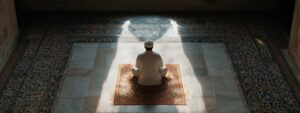
The Road to Peace through Self-Examination
by Keiji Kunitomi
Self-examination can perhaps be called a practice that is common to all religions. In some religions, it might take the form of offering a prayer to the deity; in others, it might take the form of meditation. Indeed, the forms of self-examination can vary from person to person. In Buddhism, too, self-examination takes different forms depending upon the sect and the individual performing it. . . .
Self-Examination and Peace Work
by Gunnar Stalsett
To be a peacemaker, you need to understand the deeper dimensions of the conflict or struggle, and you need to see with your heart. There is a role for empathy, not only for intellect.
Shinto, Self-Examination, and Religion as Tools for Political Control
by Caitlin Stronell
I was born in a strictly atheist household and, even though I attended a Christian secondary school, I spent most of the time asking difficult questions about why Mother Mary had to be a virgin and railing against what I felt to be the inherent conservatism of the Christian establishment and values. I was very much involved in the environmental movement at the time, . . .
Interviews
Partners in Prayer and Peacemaking
An Interview with Rev. William G. Sinkford
Rev. William G. Sinkford was in Tokyo in November 2006 to attend the ceremonies celebrating the centennial of the birth of Rev. Nikkyo Niwano, the late founder of Rissho Kosei-kai. During his stay, Dharma World interviewed him on the significance of self-examination by people of religion in today’s troubled world and the approach of the Unitarian Universalist Association (UUA) to the religious diversity in American society.
Sino-Japanese Ties Must Be Deepened
An Interview with Master Jue Xing
Master Jue Xing was among the guests at a centennial celebration of Founder Nikkyo Niwano’s birth in Tokyo last November. DHARMA WORLD met with Master Jue Xing at his hotel, and he spoke to us about the importance of friendly exchanges between Chinese and Japanese Buddhists and of self-examination by people of faith.
Essays
Learning from My Family
Invaluable lessons can be taught by the members of every generation. Most important is the essential role of forgiveness in all relationships.
Religions Are Crucial to Attaining Peace
by Christina Lee
Dedicating one’s life to the cause of peace is a commitment not to be taken lightly. It calls for courage, for knowing how to suffer.
World Peace Begins in Your Mind
by Tulku Thondup Rinpoche
The mind is the main factor. It moves quickly and is the forerunner of all acts. Whatever you say or do with a pure mind, happiness is sure to follow.—The Buddha
Reflections
Grasping the Heart of Buddhism
by Nichiko Niwano
Buddhism is the teaching of awakening. It is something we achieve, and savor the joy of, for ourselves. When we can convey that joy to others, we can say we have a self-reliant faith.
Essays
Avoiding Religious Temptations in the Global Neighborhood
by Robert F. Smylie
When fundamental religions and political realities are distorted, the impact in the public arena is profound.
Zen: Meditation and Simplicity as a “Sacrament”
by Notto R. Thelle
Zen does not transcend the human consciousness in a search for “higher” value, this author says. On the contrary, one is summoned back to the original awareness, to this world.
Symposium
Symposium in New York Commemorates Centennial of Founder Nikkyo Niwano’s Birth:
An Engaged Buddhist View of Shared Security
by Sallie B. King
Reflections on “Shared Security”
by Christopher S. Queen
Japanese Buddhist Folktales
The Threefold Lotus Sutra: A Modern Commentary (90)
The Sutra of the Lotus Flower of the Wonderful Law Chapter 12: Devadatta (2)
by Nikkyo Niwano
Dharma World