
April–June 2008, Volume 35
Features
The Many Forms of the Bodhisattva Kuan-yin
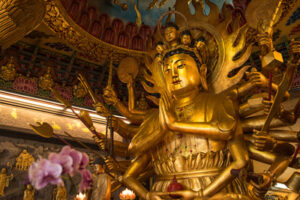
One by One, Becoming a Hand on the Thousand-Armed Kannon
by Yoshiko Izumida
The bodhisattva Kannon has been known for a long time, not only to members of the various sects of Buddhism, but also to the many Japanese who are not religious. I would even say there are almost no Japanese who have not seen an Eleven-Headed Kannon statue or a Thousand-Armed Kannon statue.
The Compassion and Wisdom of Kuan-yin
by Gene Reeves
Respecting the hidden wisdom of ordinary people, we might see Kuan-yin devotion as a kind of skillful means used by the Buddha to bring the Dharma to such people in the midst of their suffering.
Kuan-yin Devotion in China
by Chün-fang Yü
The sexual transformation from the masculine Avalokiteshvara to the feminine Kuan-yin seems to be a unique Chinese phenomenon that has fascinated many scholars.
The Many Forms and Functions of Kannon in Japanese Religion and Culture
by Mark R. Mullins
The bodhisattva became domesticated, moving beyond the original Buddhist sources to be appropriated more widely by large numbers of religious groups and institutions.
“Deeply Female and Universally Human”: The Rise of Kuan-yin Worship in America
by Jeff Wilson
Beyond gender, two closely connected aspects of the bodhisattva make her particularly appealing to convert Buddhists, compassion and the ability to take on any form to help those in need.
Becoming One with Kannon, the Bodhisattva of Compassion
by Yasuaki Nara
A person who suffered a series of misfortunes throughout his life learned to accept reality and live with a positive attitude after entrusting everything to Kannon.
Mindfully Invoking Kannon’s Power
by Ryokan Ara
A Buddhist priest has come to understand that reading the Kannon Sutra as it is, and believing in it as it is, is all one needs to do.
Kannon’s Compassion: The Thinking of Rev. Nikkyo Niwano
by Michio T. Shinozaki
The founder of Rissho Kosei-kai saw it as more than ordinary sympathy, which tends to have human attachments. In his view it is a practical model for helping others by preaching the Dharma.
Essays
The Dancing Gods of Mount Chokai: The May Festivals of Warabioka and Fukura
by Gaynor Sekimori
A special participant in two annual spring events describes their continuing social role in their communities, although few of the local people are aware of their origins.
“Until . . . the Morning Star Rises in Your Hearts”
by Notto R. Thelle
Encounters with Eastern religions can make people in the West aware that faith not only hears, but it also sees.
Reflections
Daily Prayers, Daily Reverence
by Nichiko Niwano
The role members now have to play will of course give proper respect to history and tradition, but at the same time embrace changes appropriate to our era.