
Autumn 2019, Volume 46
Features
Manga, Anime, and Contemporary Religion
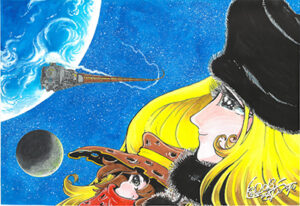
Manga (comics) and anime (animation) are an integral part of the Japanese contemporary pop culture, and they have a multitude of fans, especially among the youth, both in Japan and internationally. Among the devoted anime fans are many who attend events featuring popular anime characters and seek pleasure in wearing costumes of their favorite characters for exhilaration and self-identification. There are even anime pilgrimage spots all over Japan, many of which are locations where the stories take place.
There are a number of religiously themed manga and anime. According to some researchers, these manga and anime can be roughly classified into four categories: 1) manga and anime that explain religious doctrines or portray the lives of important religious figures; 2) those whose stories take place at religious sites, such as temples and shrines; 3) works that take up problems related to religions; and 4) compositions that deal with life and death and exhibit or inspire interest in spirituality. Some argue that manga and anime perform a role that religion has actively played in the past in helping people to establish a sense of existence and to connect them to the world.
Dharma World will explore the relationship between manga and anime and contemporary religion, and we will consider the roles that they are playing in enhancing people’s lives.
Manga, Anime, and Contemporary Religion
by Hiroshi Munehiro Niwano
The affirmation of life seen in the works of Tetsuya Chiba and the concepts of universality and timelessness in the works of Leiji Matsumoto are also found in the message at the core of religion.
Manga, Anime, and Religion in Contemporary Japan
by Jolyon B. Thomas
Rather than seeing popular illustrated media as tools that transmit “pure” or “adulterated” religious content to passive audiences, I think it is more productive to think of manga and anime as a set of representational techniques designed to trigger visceral responses, elicit emotional reactions, and prompt intellectual reorientations.
The Quest for Selfhood in Manga and the Spirituality of Contemporary Japanese
by Hara Takahashi
Given that religion does not serve as a point of reference for the Japanese, . . . manga such as these that tell the stories of youngsters who discover themselves in the context of their ties with others provide a useful starting point from which to explore the spirituality of the Japanese.
Manga: Fiction and Reality— the Case of Hayao Miyazaki’s Shuna’s Journey
by Martin Repp
This popular genre of Japanese “youth manga” commonly tells the story of a brave young hero or heroine fighting for justice, a humane society, or the survival of humankind when facing catastrophic disasters on a global scale. Adults mostly appear as people who submissively accept their fate and do not challenge it and do not dare to take risks in order to gain freedom.
Wild Words and Pointy Pictures: Hōben in Jirō Kuwata’s Lotus Sutra Manga
by Jon Holt
To help readers understand how to read the Lotus [Sutra] today, [Kuwata] uses his iconic manga characters and imagery to visually reveal in easy steps how to read and understand the sutra’s main points. What he argues for is a personal connection where we can hear its true, deeper voice (koe). If we do this, then the Lotus can best help us reconceptualize our understanding of reality.
Essay
“Translating” the Lotus Sutra in the University Classroom
by Aaron P. Proffitt
I try to model for my students a balanced wisdom-andcompassion approach to the study of religion in which we ask critical, skeptical, even suspicious questions of our material while also seeking to place ourselves in the shoes of those people who compiled or composed the texts we are reading.
Rissho Kosei-kai Buddhism
Given the Gift of Life and Sustained by the Buddha
by Dominick Scarangello
The Original Buddha of the Lotus Sutra is a personification of the omnipresent, ultimate truth. . . . It is neither born nor perishes, and it pervades all phenomena throughout the entirety of the universe, governing the arising of all things, including us. It is the great life force of the universe.
Reflections
Because We Are Different
by Nichiko Niwano
Niwano Peace Prize
The Third Shift: The Long Journey to Unite Humanity and Heal Our Woundedness
The Thirty-Sixth Niwano Peace Prize Acceptance address
by John Paul Lederach
The Niwano Peace Foundation awarded the thirty-sixth Niwano Peace Prize to Dr. John Paul Lederach, a professor emeritus of International Peacebuilding at the Kroc Institute for International Peace Studies at the University of Notre Dame, in the United States, in recognition of his role in the development and teaching of peace theory and strategy, as well as his on-theground peacebuilding work around the world, including in Colombia, Nepal, Northern Ireland, and the Philippines. The award ceremony took place on May 8, 2019, at the International House of Japan, Tokyo. The recipient’s address follows.